


MONIQUE VAN MUNSTER, embroiders since 1988, needle and thread are my concept
My history in textiles
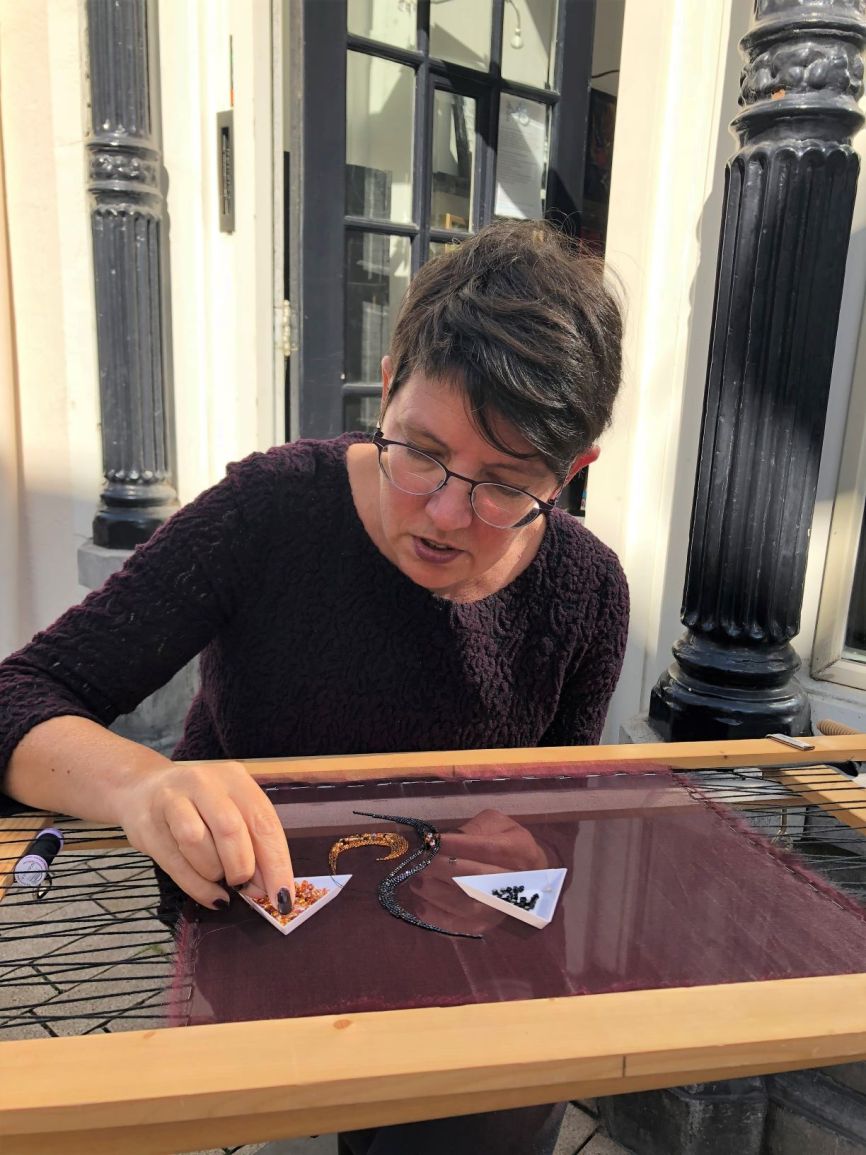
Let me introduce myself, I'm Monique van Munster, Brodeuse....
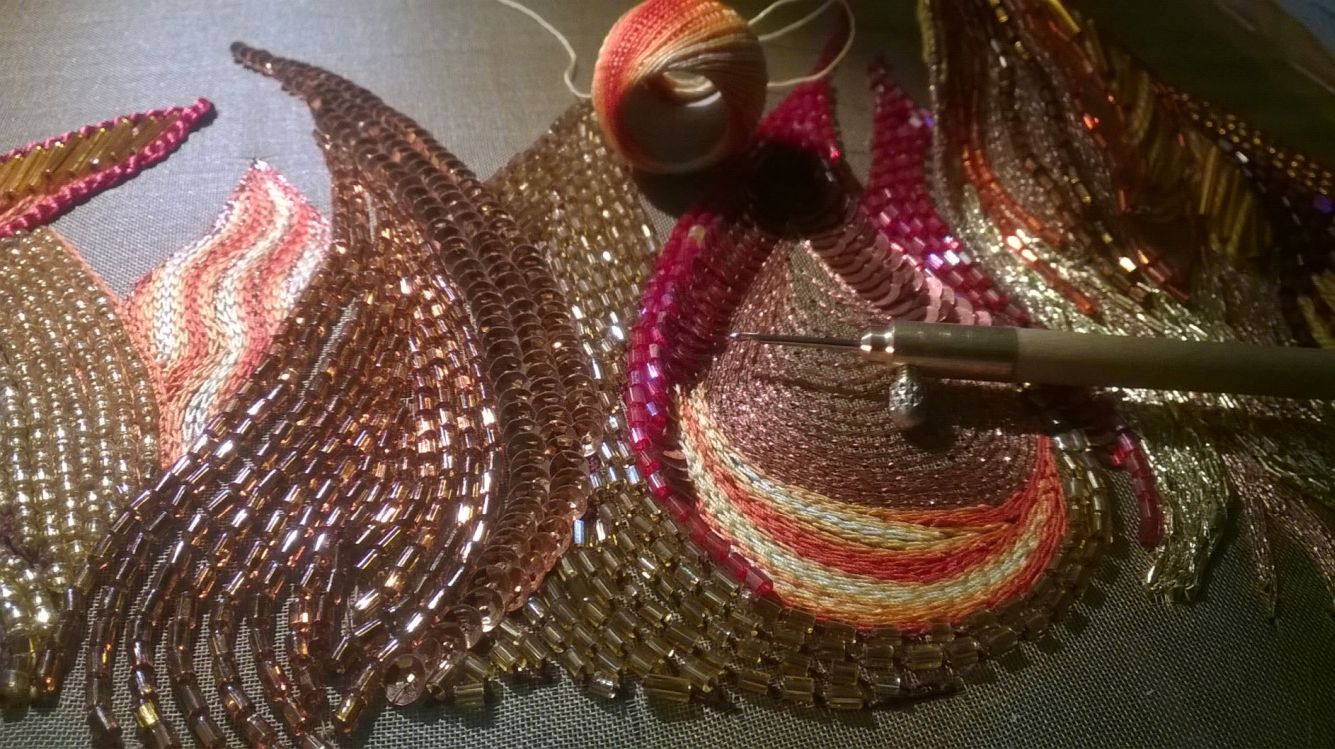
With a strong sense of history, I develop on old embroidery techniques. I have been immersing myself in textile crafts techniques for more than thirty years and have developed into a specialist in embroidery. I have a fascination for the infinite possibilities of needle and thread, and I also want to know how something is made, I research many techniques and applications. The research does not focus on being able to reproduce historical and traditional embroideries, but serves more as inspiration and interpretation. In recent years I have mainly focused on Broderie d'art, a collection of embroidery techniques from Haute Couture in which I experiment to come up with new working methods, of which goldwork embroidery is one. I also immerse myself in needle lace, pulled threads, schmock and pleating and other techniques to enrich my embroidery.
My mother was a seamstress at Maison Kuhne, a fashion house that, under license from the Haute Couture houses in Paris, such as Chanel and Dior, made tailor-made clothing in an original pattern for dutch customers, such as the royal family, ambassadors and diplomats, nobility and notables.
When she said goodbye to Maison Kuhne, she was given some old beadwork pieces that were in her drawer, not knowing what it was... The beads were embroidered with a chain stitch on tulle, I was allowed to play with them all my childhood, I was just not allowed to cut them.... To be continued...
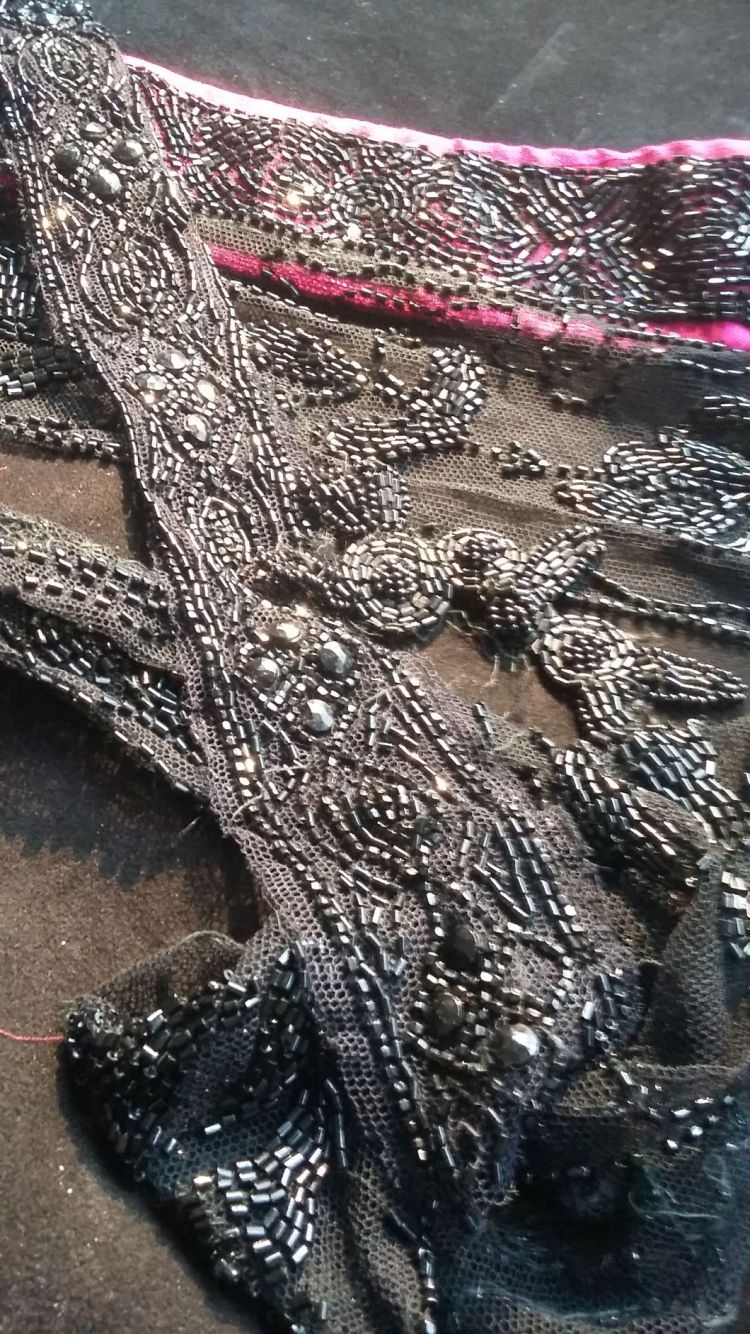
beaded embroidery from the stock of Maison Kuhne
As a child I was taken to folklore festivals in Brittany (Fr) where I always studied traditional costumes with my mother and learned to recognize many different textile crafts techniques. Later I danced for about 30 years in various folklore groups where I was usually involved in the maintenance of traditional costumes, so I had to research many different types of textile crafts to be able to restore it.

Monique van Munster in a traditional costume of 1940 from Loriënt (FR)
 Axel bow from the collection of Jan Knoppers, which I restored
Textile methods and art history...
In high school, in addition to the regular curriculum, I also chose to add certificates in textile crafts and in art history / art philosophy to my diploma. What seemed to be just minor subjects turned out to be the most important subjects for me. Through art history I have learned to place art and craft in a broader perspective in terms of social developments, technology and historical background. Art philosophy taught me a sense of color and proportion that transcends personal taste, by drawing and painting myself developed my own design language. In the textile crafts course I came into contact with various techniques that were not only technically discussed, but with which artistic processing was also important.
I had a fascination for needle and thread from an early age and only saw possibilities of what was to do with it. The more different techniques I learn, the more I can combine with them. I don't aspire to make everything that used to be made. I suck it all up and then give it my own twist.
Development in my own textile work
Pulled threadwork

Pulled threadwork in freestyle design
After having developed the technical insight into this embroidery technique in the textile crafts course, I started to develop stitch structures that can complement existing stitches. In this work, for the first time, I started to vary on an existing craft technique.
Tapistry

experimental tapistry embroidery
By painting the pattern first, I was able to let go of the habit of completely covering the pattern with embroidery stitches, as is the custom in regular tapestry embroidery. By restricting myself not to use cross stitches, I started looking for all kinds of embroidery stitches that I adapted to be able to apply as a filling stitch structure in many different yarns. I did not limit myself to tapestry wool, but used all kinds of yarns, from very thin cotton special dentelle to very thick sudan wool and fantasy yarns and ribbons.
This way of working does not go unnoticed and leads to an article in the then leading magazine "Handwerken zonder Grenzen".
Freestyle embroidery

bag in freestyle embroidery
In this embroidery I let go of the countable embroidery stitches and I was inspired by the print of this fabric, both in color scheme and design. Again, I used many different embroidery stitches and different types of yarns to create stitch structures and thus forge the fabric print and embroidery into a whole.
Embroidery on Artvilt
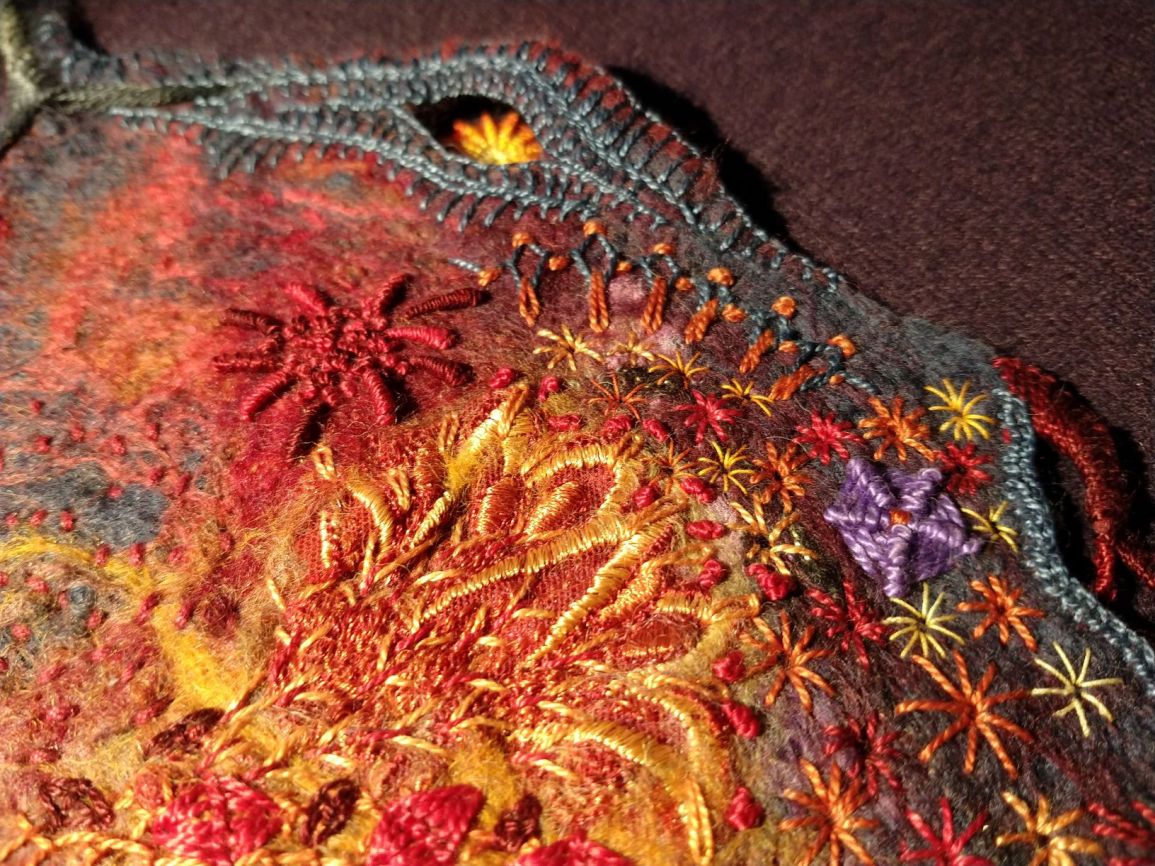
freestyle embroidery on Artfelt
After a while of mainly felting and punching, I felt the need to supplement my felt work with embroidery. My felt was always very thin, with lots of added materials like lace and silk fibers. I punched that felt on a woolen surface fabric to get a firm and workable surface. I have always enjoyed the felt that always remained a bit unpredictable and the precision with which you can add embroidery stitches to add accents to the felt work. Again, it was an interaction between the background and embroidery to create structure and accents.
needle lace

experimental needle lace in 3D
During a holiday in Italy, we discovered the museum about needle lace near Venice on the island of Burano, a specialty that has flourished in this region. Inspired by this, I immersed myself in the technique of needle lace.
Broderie d'art

detail Broderie d'art
I came into contact with Broderie d'art via the internet and found out that this technique is based on the tambour embroidery technique of the Lier lace, so I started looking for a course and ended up with a perlage course based on Lier lace in Belgium. For me, the historical awareness is very important, I want to go back to the original technique and knowledge. So I went to Lunéville for an in-depth course. A place in France where the Lunévillehook was developed, the crochet hook for broderie d'art. During this in-depth course in Luneville I gained more insight into the possibilities and technical variations with the lunevillehook. A few basic stitches inspire me so much that I have started to vary endlessly and have developed my own techniques in it. This is a development that continues indefinitely and is always supplemented with matching techniques.
Goldwork embroidery
Due to a request from Crafts Council NL to develop a masterclass gold embroidery for them for the Fashionclash 2018 in Maastricht, I started to delve more into traditional and experimental gold embroidery techniques, which led to a whole new specialization.

Example for Masterclass Gold Embroidery
Passementerie and heirloom buttons
In the continuous research into historical embroidery techniques and how they can be applied in a contemporary way, I started to delve into trimmings, the decorative reinforcements along hems, cuffs and buttonholes. Again because of a question, I have immersed myself in making traditional buttons with which a very personal display can be given to a garment.
